Showing posts with label 20th Design Century. Show all posts

Saturday, October 11, 2014

20th Design Century

  
Introduction
            20th Design Century is a module to discover and learn facts of the arts dimension intensively in a way that is easy to recognise and understand. This module is to engage key developments in 20th century art and design. Besides, to see how all the historical influence to the contemporary world. 20th century is the era that had many development on arts and human involvement in every part of the world and so on till today. The 20th Design Century module’s main scope of study is to go through Design History as a Tool for Contemporary Design Production. The studies and coverage topics are concentrate most on historical dimension of the 20th century. Methods and learning curve of this module is for identification and critical evaluation of key issues in the history of visual communication. Development of ideas and demonstration of appropriate theories to analyse all the genres of illustration. Effective learning outcomes are measured before and after every stage of experience in this module. Practical understanding of each topics to exercise the imaginative abilities and to develop the creative identity by multi-tasking and multi-skilled approach to practice professional ethics.
            Most influenced to the contemporary world is the arts and illustrations from Cubism, Dadaism, Surrealism, Conceptualism and Postmodernism. Each of these topics are the division that impacts the most to the contemporary world where changed view of people including thoughts and understanding of the issues that has been spoken about. The impacts are equal side to side as positive and negative. As a designer, we are to show how influences of this dimensions may help to see the world in a proper and better view as in thoughts, mind and the issues in contemporary world by concluding all these factors with arts and illustrations.


Process used
            20th century’s dimension of arts and illusions made the world shook and turned the world to look at it especially politics and social culture. In 20th Deign Century module, we started to look into Cubism which was very famous at the beginning of the 20th century. Cubism was an artist’s response to the technology which is seems to be the photography. It is the understanding of the image as how it is or presented. As for the module, for Cubism, a task of  taking footages of instant human reaction and to make it to a short video where to see different reactions on face with different situation of people. For an activity of this task, requirement was needed to be accessed using ‘Instagram’. This method was to show that instant situation images of people in public. This is similar to the social culture that was in the Cubism era. For additional part of experimentation, pictures to be accessed era needed to relate current and public issues. At the beginning, idea for this task were carried out with a brainstorm (refer Figure 1).

            After a challenging task of Cubism, continued with Dada. Dada was a literary and artistic movement born in Europe at a time when the horror of World War I was being played out in what amounted to citizens' front yards. Topic that given for this task is to collect data of one current issue then, relate few objects as in Dada terminologies. It was a failure, but the academic intention was achieved. Dada is a nihilistic and with principles of irrationality, incongruity, and irreverence towards accepted aesthetic criteria. Most of them worried and had negative and positive thoughts equally about Dada.


            Moving forward to the next task was the dimension of Surrealism. Surrealism originated in the late 1910s and early '20s as a literary movement that experimented with a new mode of expression called automatic writing, or automatism, which sought to release the unbridled imagination of the subconscious. At the beginning of the 20th century, Surrealism movement goes on developing. These days a lot of artists worldwide created their works being influenced the ideas and techniques of Surrealism style. The movement has transformed into many other artistic styles and nowadays there are lots of painters whose works can be referred to this very style.
            Following the next dimension, that was Conceptualism. Conceptualism is a dimension where the artworks have a specific concept and message as all the dimensions of art. Conceptual here was not only having an idea of the project, it was a practice for all the area of investigation for this module. This shows that each area of this module are related to every part of investigation as in ideas and speculation. Conceptualism not just as template for this module, it engages in all the modules for this semester. Especially in Methods of Investigation, ideas and methodologies of conceptualism reflected as a medium for the last task.

Postmodernism was the next topic that to be covered in this module. Arts and designs of postmodernism are from sub-consciousness idea or imagination that might exist or not. Three main elements that taken note was about Postmodernism Art, Postmodernism Design and Postmodernism Architecture. This topic was very helpful for the other module in this semester. For the module Critical Thinking, a task of photo manipulation. The task was to pick two object and complete a sketch using the selected objects (images at supportive documents). 


Conclusion

            20th Design Century in this semester reflected in appropriate term for learning curve, skills development, acknowledgment and thinking skills. After experiencing all five areas, history of art are seems to be helpful in all angle of study for the whole semester. Besides, multi-tasking in artwork and data collection are improved.  Each skills attached from this module are a guideline for the other modules as well. Tasks given in this module is to practice ethics in design term and it had clearly achieved. All the facts of art from the research are guidelines and experience for current and the upcoming art division. In short, skill development including the topics of research in this module reflected and contributed positivity to all aspect in art.

           
Supportive document


Figure 1
Idea development for the first task. (brainstorm)


Marcel Duchamp 


figure 2

“With his Fountain (1917), Duchamp made the quintessential statement about the history and future of art.
And his quote : "You cannot define electricity. The same can be said of art. It is a kind of inner current in a human being, or something which needs no definition."


Figure 3
The Blind Man magazine by Marcel Duchamp


Terry Jones
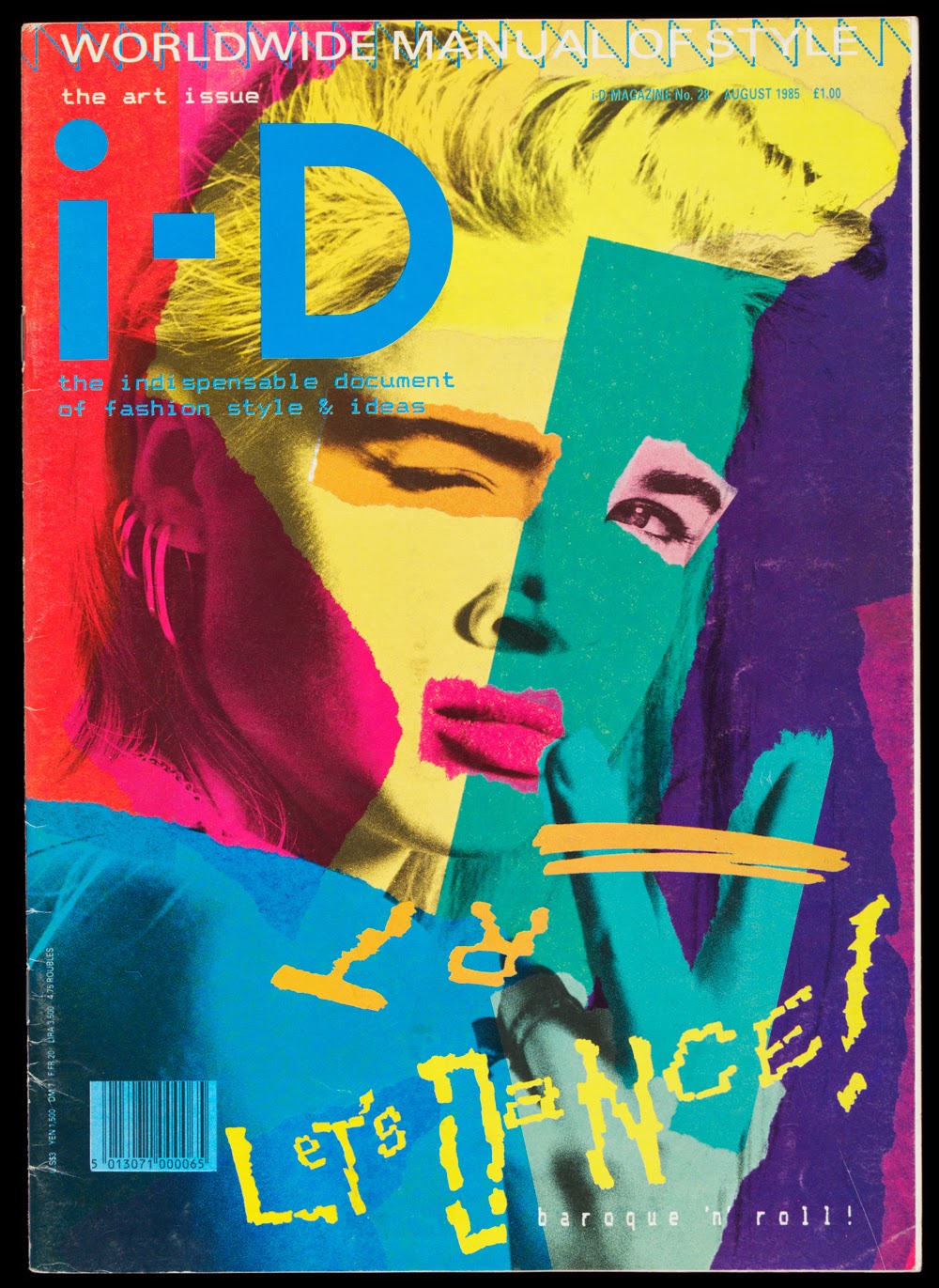
 Figure 4
I-D is a postmodernism magazine 


Terry Jones, a postmodernism artist and the publisher of I-D


 Figure 5
Your Body is a Bodyguard , by Barbera Kruger


Barbera Kruger, Newark, New Jersey.


Figure 6
Le Pigeon aux Petits Pois- Picasso


Figure 7,8,9
Critical Thinking, a task of photo manipulation (Postmodernism)


Reference

1) Images


Figure 2 : google image search. http://www.stephenhicks.org/wp-content/uploads/2010/11/duchamp_fountain.jgp.

Figure 3 : google image search. http://www.dada-companion.com/journals/covers/cover_280px_blindman-2.jpg

Figure 4 : google image search. http://www.vam.ac.uk/_ data/assets/image/0005/181895/NAL.PP.22.J_ID_art_issue_1000px.jpg

Figure 5 : google image search. http://24.media.tumblr.com/tumblr le591zXglr1qe0into1_400.jpg

Figure 6 : google image search. https://onefootwalking.files.wordpress.com/2011/02/le pigeon_aux_petits_pois_1911.jpg

Figure 7,8,9  : task in class for the module Critical Thinking concept of postmodernism.


2) Web page/ web documents


(2011) Barbara kruger the art history archive-feminist art. [Online]. Available from: http://www.arthistoryarchive.com/arthistory/feminist/Barbara-Kruger.html [Accessed 29 October 2014].

(2009) The art story.org: marcel duchamp. [Online]. Available from: http://www.theartstory.org/artist-duchamp-marcel.htm [Accessed 28 October 2014].

(2012) One foot walking. [Online]. Available from: https://onefootwalking.wordpress.com/tag/le-pigeon-aux-petits-pois/ [Accessed 29 October 2014]


some sketches of ideas and progress :


Friday, October 3, 2014

20th Design Century

Surrealism 

A 20th-century literary and artistic movement that attempts to express the workings of the subconscious by fantastic imagery and incongruous juxtaposition of subject matter.


Surrealism, movement in visual art and literature, flourishing in Europe between World Wars I and II. Surrealism grew principally out of the earlier Dada movement, which before World War I produced works of anti-art that deliberately defied reason; but Surrealism's emphasis was not on negation but on positive expression. The movement represented a reaction against what its members saw as the destruction wrought by the "rationalism" that had guided European culture and politics in the past and that had culminated in the horrors of World War I. According to the major spokesman of the movement, the poet and critic André Breton, who published "The Surrealist Manifesto" in 1924, Surrealism was a means of reuniting conscious and unconscious realms of experience so completely that the world of dream and fantasy would be joined to the everyday rational world in "an absolute reality, a surreality." Drawing heavily on theories adapted from Sigmund Freud, Breton saw the unconscious as the wellspring of the imagination. He defined genius in terms of accessibility to this normally untapped realm, which, he believed, could be attained by poets and painters alike.
     (Nicholas.P ,2002)

What i understand about Surrealism :

  • an era of visual art
  • positive expression
  • can be accepted as a poet
  • positive critics of World War II
  • Art of reality
Surrealism was a factor that changed opinion of people that had negative view on some issues around the world. 


Reference:

Nicholas,P (2002)Surrealism.[Online].Available from : http://www.ibiblio.org/wm/paint/glo/surrealism/. [Accessed 1 October 2014]


Wednesday, October 1, 2014

20th Design Century

Task :
Produce 3 images of Postmodernism about Design, Art, and Architecture.


1) Postmodernism Design

Tea Pottery

For this design, i selected to produce a tea pot made of an ancient pottery, a suit case holder and a beak of a parrot. The ancient pottery is to show that tea drinking culture is from ages ago. So here the parrot beak is suitable for the tea pottery as the spout. This is due to the curvy shape of the beak which is similar to the normal spout of a tea pot. Another thing here is , about the pottery which were very famous in East Asia countries where the traditional tea are served in an old tea pot that made of the same materials(clay) that being used for the pottery. 


2)Postmodernism Art

The Local Uniques

Malaysia is a country which is rich of unique type of fruits and the taste of it. The most unique in taste is the mangosteen fruit. For the look part where seems to be unique is the Pitaya fruit (a.k.a Dragon fruit).For the smell part is durian. So, here i have designed the pitaya fruit with  tha durian flesh, the mangosteen with the pitaya flesh. To show in the design that both fruits are from the domestic, i place a hibiscus flower nectar (Malaysia National flower) to the mangosteen fruit and the hibiscus flower stem at bottom of the pitaya fruit.


3)Postmodernism Architecture

The KrisBiscus Building

As i said in the previous art,hibiscus is the national flower for Malaysia. So, the architecture that i have design here is a petal of the hibiscus and the nectar which has a kris(keris) at the edge of it. The kris(keris) represent the Malaysian Royal weapon of the King. This architecture is a full glass architecture. And the purpose of this architecture is to be built at the Putrajaya,where all the Malaysia Government documentary are placed including the Department of Higher Studies Of Malaysia. This architecture were designed with the theme of the royal weapon of Malaysia (Keris) and the national Flower(Hibiscus), so it came KrisBiscus.....


Before starting this task, there are some exploration on making design and some sketches of these concepts. These are the sketches and how the idea developed  :


Reflection :
I have learnt what is postmodernism is about. I understand that it comes from the subconscious ideation of an artist and all of the subconscious outcome has different messages and meaning.
What i understand about Postmodernism is :
  • no truth, just an illustration
  • might or not exist in future
  • self concepts and rules


20th Design Century

Postmodernism

Postmodernism

Postmodernism Art and the Artist that seems to be interesting for me


1)


'You Are Not Yourself' (1984) by Barbara Kruger
This postmodernism art illustrates that “woman” is made up of shattered parts, various roles and expectations forced upon her by society. A mirror should reveal a true and whole representation of oneself, but this mirror is fragmented, distorting the image of the woman. She picks up one shard and examines it, seeming unable to recognize her own reflection. The parts do not fit together into a whole; woman cannot be all that society expects her to be.The construct of “woman” is an identity that alienates the person from the internal power and abilities of the self. Society constructs a woman’s identity, building a glass prison from which she cannot escape.

Born on January 26, 1945, in Newark, New Jersey.


2)


Artist: Terry Jones

Title: i-D Magazine
Date: 1985
Suggest disenfranchisement, disaffection, and disillusionment with collective action. One of the most popular Surrealism magazine I-D. This was Terry Jones great success to elaborate his arts of Postmodernism. I.D. was founded in 1954 as Industrial Design. The name was later abbreviated to an initialism; in the 1980s the initials came to stand for International Design to reflect the magazine's broadened scope.


Terry Jones, was born in 1945 in Northampton, England.


Postmodernism arts are very interesting and it is meaningful if we know how to see them in a postmoderniser view. There are no useless design in this world and so on with postmodernism arts.

The most important part in Postmodernism is ,there are no rules.....


Tuesday, September 30, 2014

20th Design Century


Mid Term Review

For the module 20th Design Century, i had learnt so many facts about arts and history of an era of art.
Besides, this module is about the 20th Century and the design methods and quality in 20th Design Century. For facts and learning curve,this module leader had lead me to discover on some nihilistic arts and about Cubism, Dadaisme, Surrealism, Conceptualisme and Postmodernisme.

The design term in this module is to try out the concept of each era that has been stated above. 20th Design Century module, are a good way to learn historical facts and art of design. I had learnt on how all these and future artworks had and might be an influence for the world to observe and criticize. 

Monday, September 29, 2014

20th Design Century


Surrealism


           Surrealism is a style in which fantastical visual imagery from the subconscious mind is used with no intention of making the work logically comprehensible. Founded by Andre Breton in 1924, it was a primarily European movement that attracted many members of the chaotic Dada movement. It was similar in some elements to the mystical 19th-century Symbolist movement, but was deeply influenced by the psychoanalytic work of Freud and Jung.

            Surrealism originated in the late 1910's and early 20's as a literary movement that experimented with a new mode of expression called automatic writing, or automatism, which sought to release the unbridled imagination of the subconscious. Officially consecrated in Paris in 1924 with the publication of the Manifesto of Surrealism by the poet and critic André Breton (1896–1966), Surrealism became an international intellectual and political movement. Breton, a trained psychiatrist, along with French poets Louis Aragon (1897–1982), Paul Éluard (1895–1952), and Philippe Soupault (1897–1990), were influenced by the psychological theories and dream studies of Sigmund Freud (1856–1939) and the political ideas of Karl Marx (1818–1883). Using Freudian methods of free association, their poetry and prose drew upon the private world of the mind, traditionally restricted by reason and societal limitations, to produce surprising, unexpected imagery. The cerebral and irrational tenets of Surrealism find their ancestry in the clever and whimsical disregard for tradition fostered by Dadaism a decade earlier.


An image of a Surrealism art by one of the famous Surrealist :


'The Persistence of Memory'


'Dali claimed (like most surrealists) that his images were “dream sequences” or inspired by his subconscious.'


                                                                                                                                 Salvador Dali


The Impact of Surrealism


Surrealism is known as a cultural movement originated in the early-1920s.  The movement became recognized all around the globe and affected various media, including the visual arts, literature, film, and music, political thought and philosophy.

Surrealism movies include Entr'acte (René Clair,1924), La Coquille et le clergyman (Germaine Dulac, 1928), Un chien andalou and L'Âge d'Or (Luis Buñuel and Salvador Dalí), L'Étoile de mer (Man Ray, 1928), by Luis Buñuel and Salvador Dalí, 1930), Le sang d'un poète (Jean Cocteau, 1930). Surrealism influence is present in a number of films. Such filmmaker as David Lynch due to some aspects of many of his films is also regarded as a Surrealist. Surrealism in movies is recognized due to the sudden emergence of the uncanny into the "normal" which may or may not be further explored in the rest of the film.

Surrealism has greatly impacted many fields. Surrealism in art is a creative act of effort to liberate imagination. The Surrealism style dynamic and as dialectic in its thought, is present in the works of the obscure poet Samuel Greenberg and the hobo writer and humourist T-Bone Slim. Clark Ashton Smith, Montague Summers, Fantomas, The Residents, Bugs Bunny, comic strips are also referred to the style. Surrealism has had an impact on radical and revolutionary politics, both directly and indirectly (the New Left of the 1960s and 1970s and the French revolt of May 1968).

Originated at the beginning of the 20th century Surrealism movement goes on developing. These days a lot of artists worldwide created their works being influenced the ideas and techniques of Surrealism style. The movement has transformed into many other artistic styles and nowadays there are lots of painters whose works can be referred to this very style.


reference   :

(2012) The metropolitan museum of art. [Online]. Available from : http://www.metmuseum.org/toah/surr/hd_surr.htm [Accessed 29 August 2014]


Reflection :

From Surrealism, i understand that it is about creating arts which is influenced from the past or the current issues by subconsciousness idea and view. For now, most arts and artists are still up to the concepts o surrealism in a different way of design. These impacts to the society too by the messages from each and every art of surrealism. Some people in certain place of a specific country accepted surrealism as in a positive point, but as same as some on the negative point.


Tuesday, August 19, 2014

20th Design Century

Task 2


DADA
Dada was, officially, not a movement, its artists not artists and its art not art. That sounds easy enough, doesn't it? Of course, there is a bit more to the story of Dadaism than this simplistic explanation.
Dada was a literary and artistic movement born in Europe at a time when the horror of World War I was being played out in what amounted to citizens' front yards. Due to the war, a number of artists, writers and intellectuals -- notably of French and German nationality -- found themselves congregating in the refuge that Zurich (in neutral Switzerland) offered. Far from merely feeling relief at their respective escapes, this bunch was pretty ticked off that modern European society would allow the war to have happened. They were so angry, in fact, that they undertook the time-honored artistic tradition of protesting.
Banding together in a loosely-knit group, these writers and artists used any public forum they could find to (metaphorically) spit on nationalism, rationalism, materialism and any other -ism which they felt had contributed to a senseless war. In other words, the Dadaists were fed up. If society is going in this direction, they said, we'll have no part of it or its traditions. Including... no, wait!... especially artistic traditions. We, who are non-artists, will create non-art -- since art (and everything else in the world) has no meaning, anyway.
About the only thing these non-artists all had in common were their ideals. They even had a hard time agreeing on a name for their project. "Dada" - which some say means "hobby horse" in French and others feel is just baby talk -- was the catch-phrase that made the least amount of sense, so "Dada" it was.
Using an early form of Shock Art, the Dadaists thrust mild obscenities, scatological humor, visual puns and everyday objects (renamed as "art") into the public eye. Marcel Duchamp performed the most notable outrages by painting a mustache on a copy of the Mona Lisa (and scribbling an obscenity beneath) and proudly displaying his sculpture entitled Fountain (which was actually a urinal, sans plumbing, to which he added a fake signature).
The public, of course, was revulsed -- which the Dadaists found wildly encouraging. Enthusiasm being contagious, the (non)movement spread from Zurich to other parts of Europe and New York City. And just as mainstream artists were giving it serious consideration, in the early 1920s, Dada (true to form) dissolved itself.
In an interesting twist, this art of protest -- based on a serious underlying principle -- is delightful. The nonsense factor rings true. Dada art is whimsical, colorful, wittily sarcastic and, at times, downright silly. If one wasn't aware that there was, indeed, a rationale behind Dadaism, it would be fun to speculate as to just what these gentlemen were "on" when they created these pieces.
Key Characteristics of Dada Art
  • Dada began in Zurich and became an international movement. Or non-movement, as it were.
  • Dada had only one rule: Never follow any known rules.
  • Dada was intended to provoke an emotional reaction from the viewer (typically shock or outrage). If its art failed to offend traditionalists, Dada writing -- particularly Tristan Tzara's manifestoes -- proved a fine, nose-thumbing Plan B.
  • Dada art is nonsensical to the point of whimsy. Almost all of the people who created it were ferociously serious, though.
  • Abstraction and Expressionism were the main influences on Dada, followed by Cubism and, to a lesser extent, Futurism.
  • There was no predominant medium in Dadaist art. All things from geometric tapestries to glass to plaster and wooden reliefs were fair game. It's worth noting, though, that assemblage, collage, photomontage and the use of ready made objects all gained wide acceptance due to their use in Dada art.
  • For something that supposedly meant nothing, Dada certainly created a lot of offshoots. In addition to spawning numerous literary journals, Dada influenced many concurrent trends in the visual arts (especially in the case of Constructivism). The best-known movement Dada was directly responsible for is Surrealism.
  • Dada self-destructed when it was in danger of becoming "acceptable".
one of the most famous dada arttist :

 Abstract Painting of Marcel Duchamp, 1918, Museum of Modern Art, New York


Marcel Duchamp,  was born on July 28th, 1887, near Blainville, France.


Marcel Duchamp is one of the most popular dada artist who exist in the early age of dada when it was found. Most of his arts are successful arts which had reflected positively to the society in France.


Reference:

Shelley, E. (2013) About.com art history. [Online] Available from: http://arthistory.about.com/cs/arthistory10one/a/dada.htm [Accessed 1 August 2014]


Reflection

My understanding and reflect on Dadaisme is:
  • an era of design 
  • an unconscious design
  • it is nihilistic
  • it has no rules
  • its a artistic  movement of imaginary
  • around the year 1916
  • some take it as positive some on the opposite (in certain countries)

Dadaisme does not have a specific topic to/in/for design, its unpredictable, can't be judged, its abstract sometimes or sometimes not at all and etc. Its more on expressing emotions and life situation on what we had gone through and on what we are going through. It is influential artistic movement. What i see in Dada is how people show importance on each and every single issues in our surrounding environment and developing ideas trough imaginations and predictive messages in certain situation.